




Drug consumption controls the individual
The individual does not control consumption
The high number of individuals who consume psychoactive substances in family gatherings or in public places, from teenagers to the elderly, points to the epidemic evolution of drug addiction. This leads to a better exploration of the topic to better implement prevention and treatment interventions.
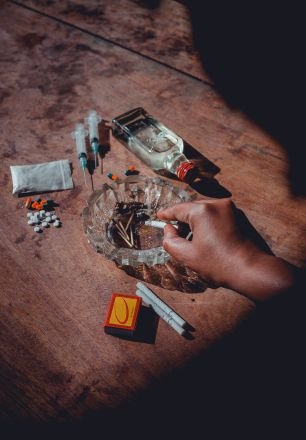

What is drug addiction?
According to the World Health Organization (WHO), drug addiction is defined as a state of physical and/or psychological dependence on a toxic substance due to sporadic or continued use of it.
It can also be said that it is dependence on a “drug” or drug that additionally causes psychological disturbances in the consumer, characterized by the obsessive and compulsive search for the consumption of substances, whether legal or illicit, among them, one can find the tobacco, alcohol and drugs, despite the social, physical and psychological consequences.
What are the Types of Dependency?
Psychological
Obsessive and compulsive tendency to use a substance due to its “pleasant” effect.
Psychological dependence consists of the ideation that the user develops in the sense of needing the substance to reach a balance or perception of well-being.
This translates into a gradual adaptation to the stimulus of substances, a negative adaptation, which involves the memory of the pleasure caused by the stimulus in certain situations, which may or may not be accompanied by tolerance - the need to progressively increase doses to obtain the desired effect.
Physics
It arises from the relationship between the drug and the organism (neuro adaptation). It is a state in which the body changes with repeated intake of the drug.
This dependence indicates that the body has physiologically adapted to the habitual consumption of the substance, with symptoms appearing when the use of the drug ends or is reduced. It means that, after more or less prolonged contact of the drug with the body, it will be the latter that demands the its presence, characterized by changes in behavior and other reactions that always include the compulsion to consume the substance, in order to obtain its effects and, often, avoid the discomfort of deprivation.
Its deprivation causes internal changes such as sweating, tachycardia, nausea and a drop in blood pressure, which is called withdrawal syndrome.
Behavioral
Refers to behavioral activities compulsively oriented towards the search for substances and their subsequent consumption, as a way of avoiding dysphoric states.
All daily activities are centered around the substance, causing social, occupational or relational activities to be abandoned or reduced due to the use of the substance.
What are the factors that contribute to addiction?
Habits that impact mental health include:
Numerous factors in everyday life can lead to substance use, resulting in dependence and other mental disorders. According to Zanelatto (2018), there are several factors, including:
- Biological;
- Socioeconomic;
- Psychological factors.
Humans are constantly seeking pleasure, which explains why the brain's reward system causes addicts to engage in repetitive behaviors to meet their needs.
This is possible by the release of dopamine, which is responsible for sensations of pleasure in the brain reward system, which explains chemical dependence with regard to biological aspects, but, as the author mentioned above. There are other factors at play, such as the environment in which the subject is inserted, his social relationships and how he processes his life, thoughts, emotions, his cognitive and behavioral processing.
Currently, drug use has been the subject of public health debates, as the misuse of psychoactive substances has represented a threat to the health of countless individuals and contributed to the increase in crime and violence in our society.
How to identify drug addiction problems?
Identification can be made by observing the signs and symptoms of withdrawal that may appear 24 or 72 hours after no consumption, which may be:
- Anxiety & depression,
- Nervousness & excessive tiredness
- Nausea & vomiting
- Excessive sweating and body pain
- Changes in mood or behavior,
- Hallucinations and convulsions,
- Insomnia and irritability,
- Outbursts of crying and jealousy,
- Mood disorders and vivid dreams,
- In addition to neurological and motor symptoms such as dizziness, vertigo, headache and lack of motor coordination.
What are the challenges faced when using drugs?
Excessive consumption: taking more drugs than intended, or drinking more often than planned;
Development of tolerance: need to consume increasingly larger amounts to feel the same effects;
Uncontrollable desire:feeling a strong desire to consume drugs and difficulty controlling consumption;
Neglect of responsibilities:prioritizing drugs to the detriment of family, professional or social responsibilities;
Harm to health: experiencing health problems related to drug use, such as lung, liver, gastrointestinal or cardiovascular problems;
Interpersonal problems: having recurring conflicts with friends, family or colleagues due to consumption;
Social isolation: withdrawing from usual social activities to drink or consume drugs alone or in isolated situations;
Difficulty stopping:trying to reduce or stop drinking without success, even when there is recognition of the problems caused by consumption;
Withdrawal: experiencing unpleasant physical and emotional symptoms when not consuming alcohol, such as tremors, anxiety, sweating and irritability;
Priority of drugs over self: ignoring self-care and personal well-being in favor of the consumption of alcohol and other drugs.
What are the harms of drug addiction?
The harms of consumption are different depending on the individual. The substances themselves have different effects on different organisms and in the different contexts of their consumption.
These can cause physical, psychological and social problems.
Drugs affect users' ability to judge, this means that drug users may be more vulnerable to inappropriate behavior, for example, having unprotected sexual intercourse, which leads to infection with hepatitis, HIV or other sexually transmissible.
Drugs can also seriously affect a person's psychological and emotional development, especially young people.
Some physical effects caused by drugs seem pleasant, but they do not last for long. After consumption, many people become depressed and lonely and begin to feel unwell and users are at greater risk of developing lung cancer, gastritis, liver damage, and kidney and nerve malfunction.
In addition to illnesses, mental disorders or psychiatric illnesses can affect their social, professional and family relationships, as dependence takes over the individual and they tend to leave their normal life or other active life to satisfy their needs in relation the drugs.
What is the impact of drug use on the family and community?
The family is part of the individual's development, in this process it can become a protective factor against drugs, and the community is the place where people are inserted, and drugs have an impact on the family and the community in general, as It is the first social group where the user establishes direct contact, however, it is the one that is most harmed by this type of situation, after all, drugs bring with them a lot of pain and suffering for those who live with them.
In this sense, economic complications, social interactions, violence, physical and mental illness, disagreements, anguish, aggressiveness, compulsive behaviors, crises in intra and interpersonal relationships, legal problems, disruption of emotional bonds, increased marginality, discrimination, Social exclusion, unemployment, social and emotional isolation, the degradation of families, neighborhoods and values, crime, and overcrowding in prisons and health services have greatly affected families and communities.
What are the measures to be taken after identifying a drug addict?
The importance of treatment against chemical dependency involves a much more complex reality that suggests the need for differentiated therapies aimed at all aspects involved.
By knowing the motivations that fuel addiction, it is possible to work with therapeutic proposals that are more focused on the patient's cognitive and social rehabilitation and the recovery of quality of life.
As a way to help these individuals, you can take the person to the health unit, detox and rehabilitation centers, help groups for drug addicts as well as community centers for people who use drugs to receive help in relation to their condition .